Today’s chat apps and messaging apps are extremely available, secure and rich in features. Messenger and Whatsapp claim #1 and #2 spots globally, with the number of users. By the way, Whatsapp was acquired by Facebook for $22 billion, think about that figure. You make a successful chat app and in few years get cashed in billions, or continue growing on your own. Of course, there’s a fierce competition, but this is a precursor for an even better messaging app. Let’s see how to make a messaging app.
Messaging app features
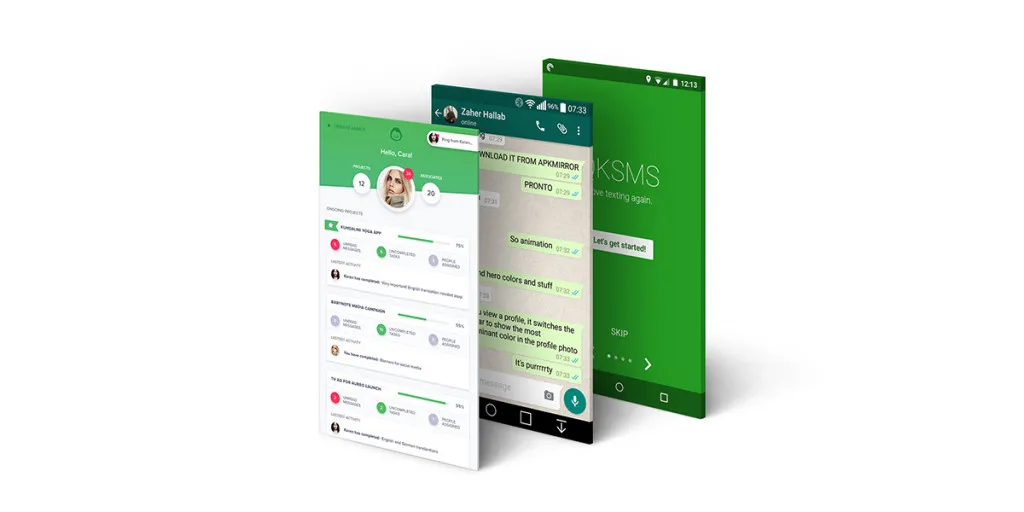
Messenger apps are no longer just for texting and sending pictures. Users browse merchandise and get all kinds of content within chat apps. Brands and businesses attract new customers figuring out new marketing ways. Messaging app development comprises a set of specific features. Group chats, sharing images, video calls, social login buttons and more.
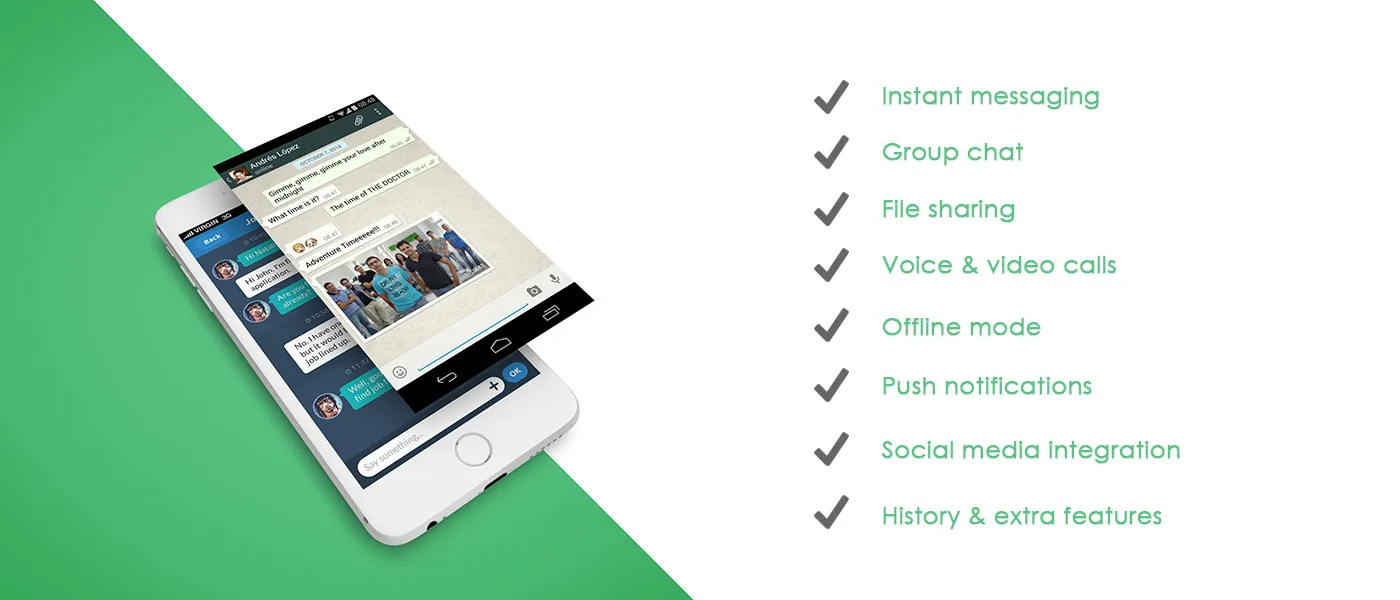
Authorization in chat apps can be implemented in various ways: via phone number, email, social media profiles. Commonly, an app then accesses your contact book and checks who is already using it. Verification of a real person through phone or social account has been given much significance lately.
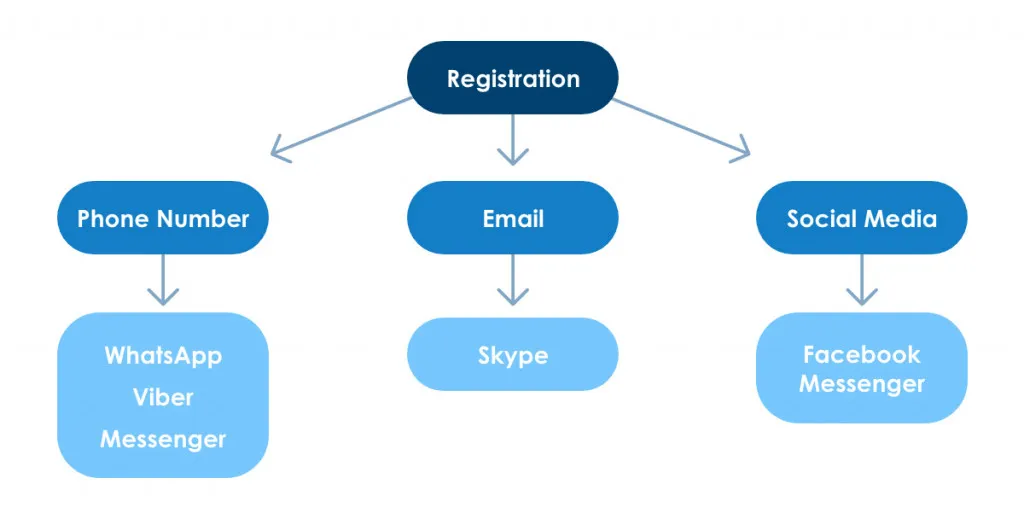
A great concern should be given to privacy and security. Hacking activities, data stealing and identity theft can not be overlooked and a chat app must be trusted. Most of messengers already require mobile phone number verification to register. For better data protection, some messaging apps use end-to-end encryption (e.g. E2EE, meaning only users communicating with each other can read the messages).
Popular chat apps
How to make a messaging app? You may take a look at top performing applications, analyze and take the best. Whether you find possible market gaps or decide to make a plain Viber clone – its up to you.
| Application | Monthly active users, MAU | Useful links |
|---|---|---|
| Facebook Messenger | 1.2 billion | Messenger exceeds 1B users |
| 1 billion | How to make an app like Whatsapp | |
| Skype | 300 million | How to uninstall Skype |
| Viber | 250 million | The cost of making an app like Viber |
| Line | 100 million | A guide to Japanese Line |
| Telegram | 100 million | Telegram review by PC Mag |
| 90 million | WeChat revenue per user $7 |
How to make a messaging app
Messaging application development depends on what do you mean by ‘create’ in the first place. Create a chat app completely from scratch writing the whole code? Or create it using online tools, APIs, protocols and libraries? Secondly, do you develop on your own or outsource it? You can certainly delegate the task to software agencies, like ThinkMobiles. Your main areas of consideration would be as follows.
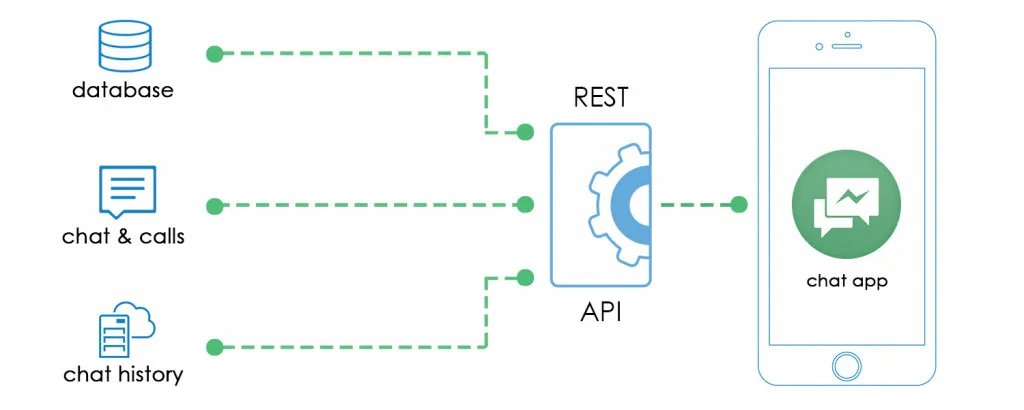
Choose the platforms – is it going to be a messaging app for Android, iOS, Windows, any other… or all of them (cross-platform development). Core functionality of a messaging app, or the back-end, would involve infrastructure like RestFul API, databases, storage servers, messaging protocols like XMPP, notification services, etc.
Chat App Design
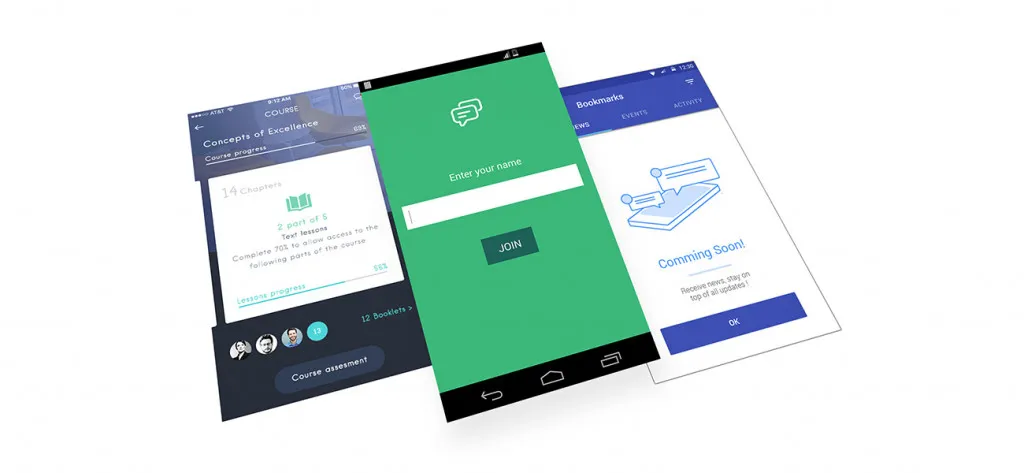
Chat is the universal UI (user interface). Messaging app design/UX should be clear-cut, minimalist and familiar. It is all about old-school texting, now with images, videos, snaps, sounds and documents. Look through dozens of chat interfaces designs available online to get inspired and determine what colors, fonts, buttons to use. A development company you partner with can also help you with chat app design trends.
Messages Exchange
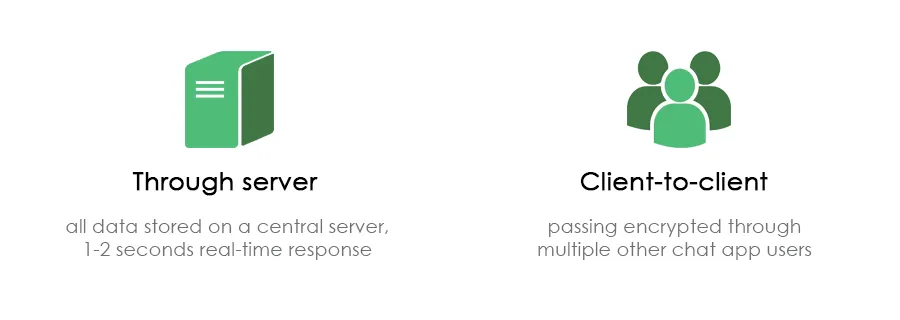
You should be aware of 2 data transferring methods when you want to know how to make a messaging app. They both involve a client-server communication. With first method messages go through a server through HTTPS protocol and are stored there. The second method implies only the authentication by a server, while messages are sent client to client, and are encrypted.
Make a plan, check developer rates, estimate if the chat app development would fit within your budget. Then there are lots of technicalities, upon which we can give you an expert advice as you contact us. Let’s build your messaging app together!
Read more: 20 top mobile development companies across the globe
Technology stack for a messaging app
Choosing the right tech stack is critical for performance, scalability, and real-time delivery. Here is a modern stack used in production-grade messaging apps:
| Layer | Technology options |
|---|---|
| Frontend (mobile) | Swift/SwiftUI (iOS), Kotlin/Jetpack Compose (Android), React Native, Flutter |
| Backend | Node.js, Go, Elixir (highly concurrent), Python (Django Channels) |
| Real-time messaging | WebSockets, MQTT, XMPP, or managed services like Firebase Cloud Messaging |
| Database | PostgreSQL (user data), Cassandra or ScyllaDB (message storage at scale), Redis (presence & caching) |
| File storage | AWS S3, Google Cloud Storage, Cloudflare R2 (media attachments) |
| Push notifications | APNs (iOS), FCM (Android) |
| Encryption | Signal Protocol (E2EE), libsodium, TLS 1.3 |
How much does it cost to build a messaging app?
Development cost varies dramatically depending on feature scope, team location, and platform coverage:
| App complexity | Features | Estimated cost | Timeline |
|---|---|---|---|
| Basic MVP | 1:1 chat, text only, auth, push notifications | $15,000 – $30,000 | 2–3 months |
| Mid-range | Group chats, media sharing, voice messages, read receipts, typing indicators | $40,000 – $80,000 | 4–6 months |
| Full-featured | Video/voice calls, E2EE, stories, channels, payments, bots, cross-platform | $100,000 – $250,000+ | 8–12 months |
Rates depend on where you hire: US/Western Europe ($100–$200/hr), Eastern Europe ($35–$75/hr), South/Southeast Asia ($20–$50/hr).
Monetization strategies
Most messaging apps start free to maximize adoption, then monetize through:
- In-app purchases — stickers, themes, premium emoji packs (LINE generates over $200M/year from stickers alone).
- Business APIs — charge businesses per message for customer support and transactional notifications (WhatsApp Business API model).
- Advertising — display ads in status/stories or discovery tabs (Messenger, Snapchat).
- Payments and fintech — integrated peer-to-peer payments and merchant services (WeChat Pay, Google Pay in Messages).
- Premium subscriptions — ad-free experience, extra storage, exclusive features (Telegram Premium).
Frequently asked questions
How long does it take to build an MVP messaging app?
A minimal viable product with basic 1:1 chat, authentication, and push notifications can be built in 2–3 months by a small team (2–3 developers + 1 designer).
Should I use WebSockets or XMPP?
WebSockets are simpler and more flexible for custom implementations. XMPP is a mature protocol with built-in presence and roster management, but adds complexity. For most new apps, WebSockets (or a managed service like Firebase) are the pragmatic choice.
Is end-to-end encryption mandatory?
Not legally in most jurisdictions, but users increasingly expect it. Implementing E2EE (e.g., the Signal Protocol) builds trust and differentiates your app in a crowded market.
Security best practices for messaging apps
Security is non-negotiable for any messaging app in 2025:
- End-to-end encryption (E2EE) — implement the Signal Protocol or similar. Users expect their messages to be unreadable by the server.
- Certificate pinning — prevent man-in-the-middle attacks by pinning your server’s TLS certificate in the app.
- Disappearing messages — auto-delete messages after a set time. Users value ephemeral communication.
- Two-factor authentication — support TOTP or biometric verification beyond SMS codes.
- Metadata protection — minimize server-side logging of who talks to whom and when.
Launch strategy
Messaging apps face a cold-start problem — they’re useless without contacts. Proven launch tactics:
- Contact book sync — show users which friends already use the app immediately after sign-up.
- Invite incentives — reward users for inviting friends (extra storage, premium features).
- Target a niche first — Slack started with dev teams, Discord with gamers. Own a community before going broad.
- Cross-platform from day one — users won’t switch if half their contacts can’t join.